Digital Communication Relay

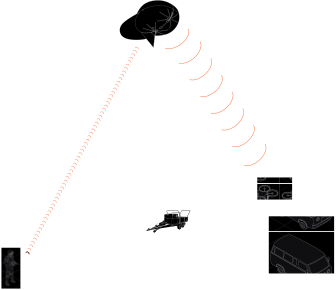
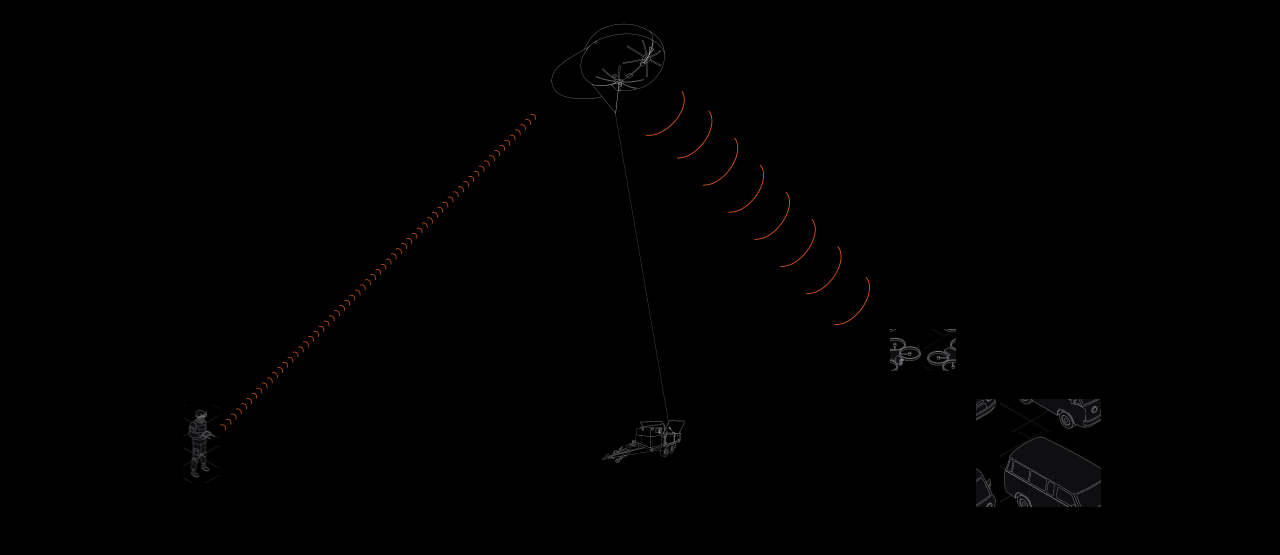
The repeater aerostat expands the coverage of secure digital communication networks by increasing the radio horizon.
SCROLL DOWN

Communication in the combat zone

Expanding the kill zone
Enemy actions on the modern battlefield significantly complicate the work of communication units. The enemy attacks ground networks and personnel to disrupt the Command-and-Control chain. The loss of communication in combat conditions threatens the lives of soldiers and the success of combat operations.
The need for tactical mobility
Modern warfare requires swift actions and high-quality maneuvering of forces. Communication units must respond promptly to changing situations and establish communications wherever needed in the shortest possible time. At the same time, stationary ground networks limit flexibility and responsiveness.
Complexity of terrain and urban environments
Terrain and urban features create an unstable radio horizon and "dead zones." The enemy strikes commanding heights, depriving units of the advantage in controlling the airwaves. As a result of signal reflection and shielding, coverage gaps occur, requiring constant retransmission to maintain stable communication.

How aerostats help signalmen on the front line

Aerobavovna's aerostat complexes allow for the rapid deployment of secure communication networks using repeaters from Motorola, L3Harris, Himera, Hytera, Persistent Systems, and other manufacturers.

The deployment time of the complex and ascent to the operating altitude takes only about 15 minutes, while the aerostat is capable of staying in the air continuously for up to 3 days, which is confirmed by combat experience.

The operating altitude for Aerobavovna aerostat complexes is 500-700 meters, which makes it possible to achieve a confirmed radio transmission radius of over 70 km and deploy repeaters at a distance of more than 20 km from the line of contact.

Key benefits

70+
kilometers of coverage radius
(depending on the repeater)
07
minutes to ascend to the operating altitude
03
days of mission duration
with a payload

Aerostat vs. Drone Repeater

Тривалість
чергування
до 3-х діб
Радіус дії (FPV)
до 80 км
Стійкість
до РЕБ
Висока
(можна підняти масивні фільтри та антени)
Ризик 
для оператора
Мінімальний
(використання кабелю/спрямованого сигналу)
Тривалість
чергування
30–60 хв
Радіус дії (FPV)
10–20 км
Стійкість
до РЕБ
Низька
(обмежена вантажо-підйомність для захисту)
Ризик 
для оператора
Середній
(постійні зльоти/посадки демаскують позицію)
Тривалість
чергування
Замінює сотні вильотів коптерів
Радіус дії (FPV)
Дозволяє вражати цілі 
в тилу
Стійкість
до РЕБ
Можливість встановлення подолання перешкод
Ризик 
для оператора
Точка випромінювання сигналу віддалена від пілота, що робить його невидимим для ворожого РЕР
Characteristic
Aerobavovna
Aerostat
Drone
Repeater
Aerostat
Advantage
Duty
duration
Up to 3 days
30–60 min
Replaces hundreds of copter flights
Operating range (FPV)
Up to 80 km
10–20 km
Allows striking targets in the rear
EW resistance
High
(massive filters and antennas can be lifted)
Low
(limited payload capacity for protection)
Possibility of installing anti-jamming systems
Risk to the operator
Minimal
(use of a cable/directional signal)
Medium
(constant take-offs/landings unmask the position)
The signal emission point is far from the pilot, making them invisible to enemy SIGINT

Stay
in Touch

Thank you!
Our specialists are already processing your request, and we will contact you shortly.
От халепа!
Схоже щось пішло не так під час надсилання форми.
Спробуйте повторити пізніше.